
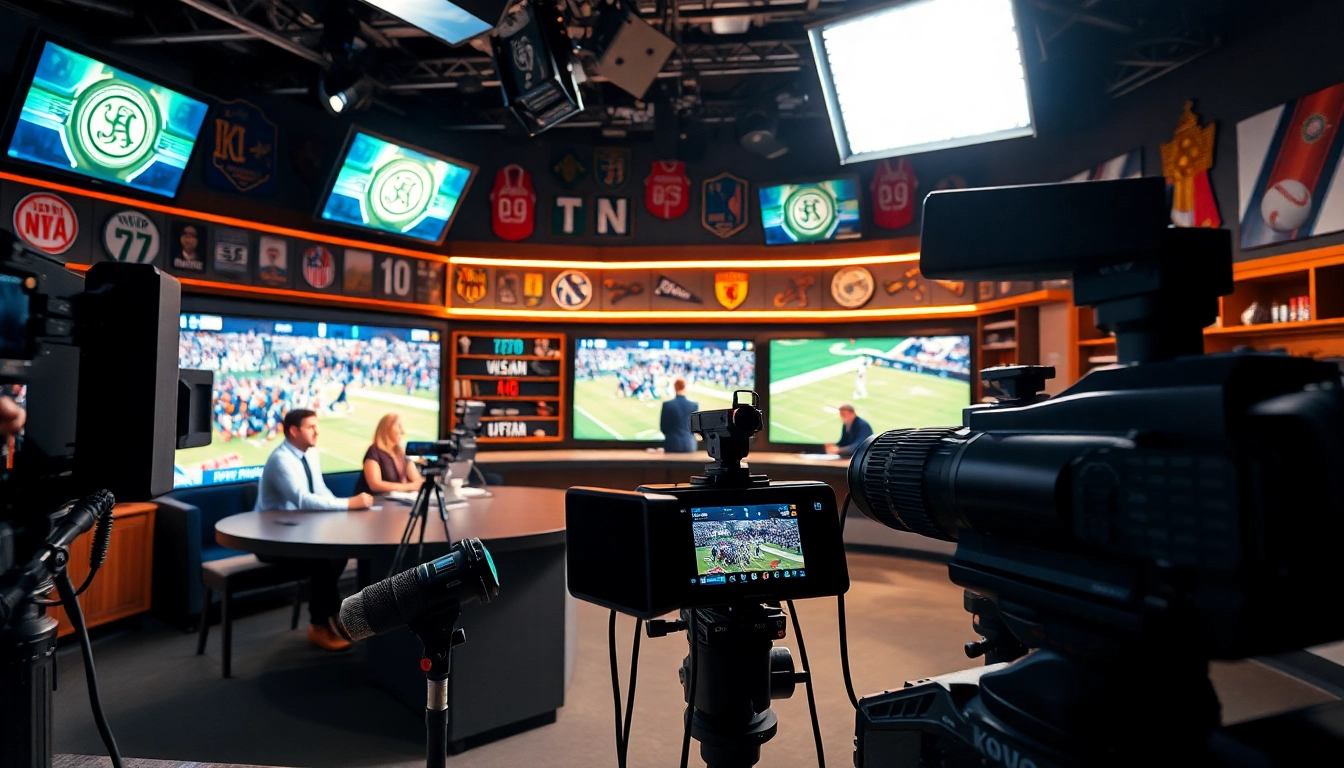
Understanding Sports Broadcasting
Definition and Importance of Sports Broadcasting
Sports Broadcasting is the dissemination of sports events to a wide audience through various platforms, including television, radio, and online streaming. Its significance lies in its role as a bridge between athletes and fans, allowing viewers to experience the excitement, tension, and communal spirit of live sports, regardless of their physical location. It fosters a sense of community and connection among fans, transcending geographical boundaries.
Moreover, in the current digital era, the role of Sports Broadcasting has evolved, integrating cutting-edge technologies that enhance viewer engagement and interactivity. The revenue generated by broadcasting rights has also become crucial to the financial health of sports institutions, making it a significant aspect of sports management.
Key Players in the Sports Broadcasting Industry
At its core, the sports broadcasting industry comprises several key players who contribute to its functioning and success. These include:
- Broadcast Networks: Major television networks that hold rights to air sports events, such as ESPN and NBC.
- Streaming Platforms: Online services like Hulu and Amazon Prime that offer live sports coverage.
- Production Companies: Firms that handle the technical aspects of broadcasting, such as camera work and sound mixing.
- Sports Organizations: Teams and leagues that negotiate broadcasting rights and create content for airing.
- Advertisers: Brands that sponsor broadcasts to gain exposure and reach their target audience.
Evolution of Sports Broadcasting Technologies
The evolution of sports broadcasting technology has been groundbreaking. Initially, radio and black-and-white television set the stage for coverage, but advancements have transformed the landscape. High-definition (HD) and ultra-high-definition (UHD) broadcasting have dramatically enhanced visual quality.
The introduction of 4K and 8K resolution broadcasts further immerse viewers, providing unprecedented detail. Virtual reality and augmented reality tools now allow fans to experience games from unique perspectives, elevating engagement. Additionally, the rise of social media has created platforms for real-time interaction, reshaping how sports are consumed.
Types of Sports Broadcasting
Live Coverage vs. Recorded Broadcasts
Sports broadcasting primarily falls into two categories: live coverage and recorded broadcasts. Live coverage is crucial for capturing the excitement of events as they unfold. It encourages viewer engagement and creates a palpable atmosphere that recorded broadcasts often cannot replicate.
In contrast, recorded broadcasts serve a different purpose. They allow for analysis and reflection, showcasing the highlights and pivotal moments of a game after it has concluded. These broadcasts are essential for audiences who may not have had the opportunity to view the event live but wish to catch up on the action.
Online Streaming Platforms in Sports Broadcasting
With the digitization of content consumption, online streaming platforms have emerged as vital players in sports broadcasting. These platforms offer flexibility, allowing viewers to watch their favorite events on demand and across multiple devices. The shift from traditional cable subscriptions to streaming services continues to gain traction.
Platforms like YouTube TV, FuboTV, and ESPN+ are becoming increasingly popular, catering to an audience eager for accessible sports content. This trend forces traditional networks to adapt and innovate, offering their own on-demand options to retain viewership.
Radio Broadcasting's Role in Sports
Despite the visual nature of most sports content, radio broadcasting remains a fundamental aspect of the industry. It provides audio commentary that can be accessed on the go, ideal for those who cannot watch games live. Radio fosters an intimate connection between commentators and listeners, often using storytelling and descriptive language to convey excitement and drama.
The adaptability of radio makes it a versatile medium, supporting sports analysis and discussion through podcasts and talk shows. While it may not be as visually engaging as television or online streaming, it plays a vital role in keeping audiences informed and engaged.
Best Practices for Effective Sports Broadcasting
Engaging Your Audience Through Storytelling
Effective sports broadcasting is about more than just reporting scores; it involves storytelling that captures the audience's imagination. Compelling narratives about teams, players, and rivalries foster emotional connections with viewers. Broadcasters should aim to share personal stories, behind-the-scenes insights, and historical context to enrich the viewing experience.
Building dramatic arcs within broadcasts, highlighting pivotal moments, and incorporating fan interactions can enhance engagement. Utilizing social media to solicit stories and opinions from viewers during live broadcasts can make them feel involved and valued, creating a two-way interaction.
Utilizing Technology for Enhanced Viewing Experience
Technological advancements are at the forefront of improving the sports viewing experience. Utilizing graphics and data visualizations during live broadcasts can provide fans with real-time statistics and game analysis, enriching their understanding of the game.
Furthermore, using multiple camera angles and instant replays allows broadcasters to showcase the action from various perspectives, enhancing the narrative. Innovations like drones and 360-degree cameras also offer immersive experiences that traditional angles cannot match, satisfying the increasingly sophisticated tastes of sports audiences.
Building Relationships with Athletes and Teams
Successful sports broadcasting relies on building and maintaining strong relationships with athletes and teams. These connections enable broadcasters to access exclusive interviews, insights, and backstage coverage that can significantly elevate a broadcast's quality.
Engaging with athletes on social media and involving them in storytelling helps humanize the sport and create relatable content. Establishing a network of trust fosters collaboration, encouraging athletes and teams to share their journey, struggles, and triumphs, making broadcasts more impactful.
Challenges in Sports Broadcasting
Maintaining Quality in Live Broadcasts
One of the most significant challenges in sports broadcasting is ensuring quality during live events. Technical issues, such as sound problems or transmission failures, can disrupt the viewer experience. Broadcasters must implement rigorous testing and backup plans to minimize disruptions, ensuring that audiences receive high-quality broadcasts consistently.
Moreover, the unpredictability of live events requires broadcasters to think on their feet. Training staff to handle unexpected incidents quickly and professionally is crucial to maintaining the audience's trust and engagement.
Navigating the Legalities of Sports Broadcasting
Legal challenges pose another hurdle for sports broadcasters. Issues surrounding broadcasting rights, intellectual property, and content restrictions can complicate operations. Broadcasters must navigate complex regulations and obtain appropriate licenses while ensuring compliance to avoid costly legal battles.
Staying informed about changes in laws and regulations affecting broadcasting rights is essential for mitigating risks. Strong legal counsel specializing in broadcasting can help navigate these complexities.
Adapting to Changing Viewer Preferences
The rapid evolution of viewer preferences presents a continual challenge in sports broadcasting. As audiences increasingly gravitate towards personalized and interactive content, traditional broadcast models are under pressure to adapt.
Broadcasters must remain attuned to industry trends and invest in research to understand what viewers want. This might involve integrating interactive polls during broadcasts, creating niche content for underserved audiences, or expanding coverage of less mainstream sports. Such adaptations can help retain audience loyalty and attract new viewers.
Future Trends in Sports Broadcasting
Integration of Virtual Reality in Sports Broadcasting
The integration of virtual reality (VR) into sports broadcasting represents one of the most exciting developments on the horizon. VR technology allows fans to experience games as if they were present, offering immersive viewing experiences that can transport them to the sidelines or even onto the field.
This technology enables interactive elements, such as choosing viewing angles or accessing supplementary stats during live events. As VR hardware becomes more accessible, we can expect to see a significant increase in its adoption in mainstream sports broadcasting.
Impact of Social Media on Sports Viewership
Social media has fundamentally changed how audiences engage with sports content. Platforms like Twitter, Facebook, and Instagram offer immediate avenues for fans to connect with teams and athletes, share their opinions, and consume content.
Broadcasters have started leveraging social media to enhance engagement by sharing highlights, behind-the-scenes content, and facilitating real-time discussions. This ongoing interplay between traditional broadcasting and social media is likely to deepen, potentially transforming how broadcasts are produced and marketed.
Emerging Markets and Opportunities in Sports Broadcasting
The sports broadcasting landscape is expanding into emerging markets, presenting opportunities for growth. Regions with growing middle classes are increasingly investing in sports, highlighting the need for broadcasting services.
Understanding local cultures, preferences, and sports can help broadcasters create tailored content that resonates with these new audiences. Partnerships with local networks can also facilitate entry into these markets, creating mutually beneficial opportunities for content distribution.
Frequently Asked Questions
What is the primary role of sports broadcasting?
The primary role of sports broadcasting is to deliver live coverage and commentary of sports events to a wide audience through various platforms, fostering engagement and connection among fans.
How does online streaming impact sports broadcasting?
Online streaming provides flexibility and accessibility, allowing fans to watch sports on demand and across multiple devices, transforming traditional broadcasting paradigms.
What are the benefits of storytelling in sports broadcasts?
Storytelling enhances emotional connections with the audience, making broadcasts more compelling and relatable, while providing context to the sports events and athletes involved.
Why is technology important in sports broadcasting?
Technology improves the viewing experience through high-definition visuals, interactive features, and real-time analytics, making broadcasts more engaging and informative for viewers.
What challenges do sports broadcasters face today?
Broadcasters face challenges such as maintaining quality in live events, navigating legal complexities, and adapting to rapidly changing viewer preferences in the digital landscape.